







Many of us are familiar with physical constipation, but emotional constipation is just as real and can be even more uncomfortable. Emotional constipation refers to the unhealthy habit of suppressing or holding back our emotions, leading to stress, anxiety, and strained relationships. This article explores the causes of emotional constipation and provides practical strategies for overcoming it.
What is Emotional Constipation: Meaning & Symptoms
Emotional constipation occurs when we habitually stuff down our feelings instead of expressing them in healthy ways. Just as physical constipation leads to discomfort and bloating, emotional constipation symptoms can include:
- Increased stress and anxiety
- Difficulty connecting with others
- Passive-aggressive behavior
- Unexpected emotional outbursts
- Physical symptoms like headaches or stomach aches
What are common emotional suppression symptoms in adults?
Emotional suppression symptoms can develop gradually and may affect your emotional wellbeing, physical health, and relationships. While everyone holds back emotions occasionally, persistent suppression can create ongoing stress and make it harder to connect with yourself and others.
Common emotional suppression symptoms include:
- Difficulty identifying or describing your emotions
- Frequently saying “I’m fine” when you’re struggling
- Feeling emotionally numb or disconnected
- Increased anxiety or chronic stress
- Irritability or unexpected emotional outbursts
- Passive-aggressive communication
- Avoiding conflict or difficult conversations
- People-pleasing at the expense of your own needs
- Feeling emotionally exhausted after social interactions
- Headaches, muscle tension, digestive issues, or fatigue during stressful periods
- Trouble forming close emotional connections
- Feeling overwhelmed by seemingly small problems
These symptoms don’t necessarily mean you have a mental health condition. However, if emotional suppression is affecting your daily life, relationships, or wellbeing, speaking with a mental health professional can help you develop healthier ways of understanding and expressing your emotions.
Hidden signs your emotions are chronically suppressed
Emotional suppression isn’t always obvious. Many people who habitually bottle up their feelings appear calm, capable, and in control on the outside while struggling internally. Because emotional suppression often develops gradually, these subtle signs can be easy to overlook.
How to recognize emotional suppression symptoms in yourself?
- Automatically say “I’m fine,” even when you’re upset or overwhelmed.
- Have difficulty identifying what you’re feeling, beyond general stress or frustration.
- Feel emotionally numb or disconnected from both positive and negative emotions.
- Stay constantly busy to avoid slowing down and facing uncomfortable feelings.
- Avoid conflict at all costs, even when your needs aren’t being met.
- People-please because you’re afraid of disappointing others or being rejected.
- Intellectualize your emotions, analyzing situations logically instead of acknowledging how they make you feel.
- Experience sudden emotional outbursts after staying composed for long periods.
- Feel physically tense with headaches, jaw clenching, muscle tightness, or digestive discomfort during stressful times.
- Struggle with emotional intimacy, finding it difficult to be vulnerable or let others know what you truly need.
- Feel guilty for expressing emotions, believing your feelings are a burden to others.
- Notice anxiety, burnout, or emotional exhaustion without understanding the underlying cause.
These signs don’t necessarily mean something is “wrong” with you. Often, emotional suppression develops as a coping strategy, perhaps because expressing emotions didn’t feel safe growing up or because you learned to prioritize others’ needs over your own. The encouraging news is that emotional awareness and healthy emotional expression are skills that can be developed with practice and, when needed, professional support.
Physical symptoms caused by long-term emotional suppression
Chronic emotional suppression can contribute to physical symptoms because the body’s stress response remains activated. Some people experience subtle emotional suppression symptoms most people overlook:
- Tension headaches
- Neck and shoulder pain
- Jaw clenching
- Digestive discomfort
- Sleep difficulties
- Increased fatigue
- Rapid heartbeat during stressful situations
While these symptoms can have many causes, persistent stress from suppressing emotions may play a role. It’s important to consult a healthcare professional if physical symptoms are severe, persistent, or unexplained.
Common Causes of Emotional Constipation
Several factors can contribute to emotional constipation:
1. Childhood experiences: Growing up in an environment where emotions were discouraged, dismissed, or even punished can leave lasting scars. Children who are taught that expressing their feelings is wrong may learn to bottle up their emotions, leading to emotional constipation in adulthood.
2. Cultural norms: In many cultures, stoicism is highly valued, and emotional expression is often seen as a sign of weakness or lack of self-control. This societal pressure to “keep a stiff upper lip” can result in individuals habitually suppressing their emotions, further exacerbating emotional constipation.
3. Fear of vulnerability: The fear that showing emotions will lead to rejection, judgment, or hurt can cause people to shut down emotionally. This fear of being vulnerable creates an internal barrier, preventing healthy emotional expression and contributing to feelings of isolation and stress.
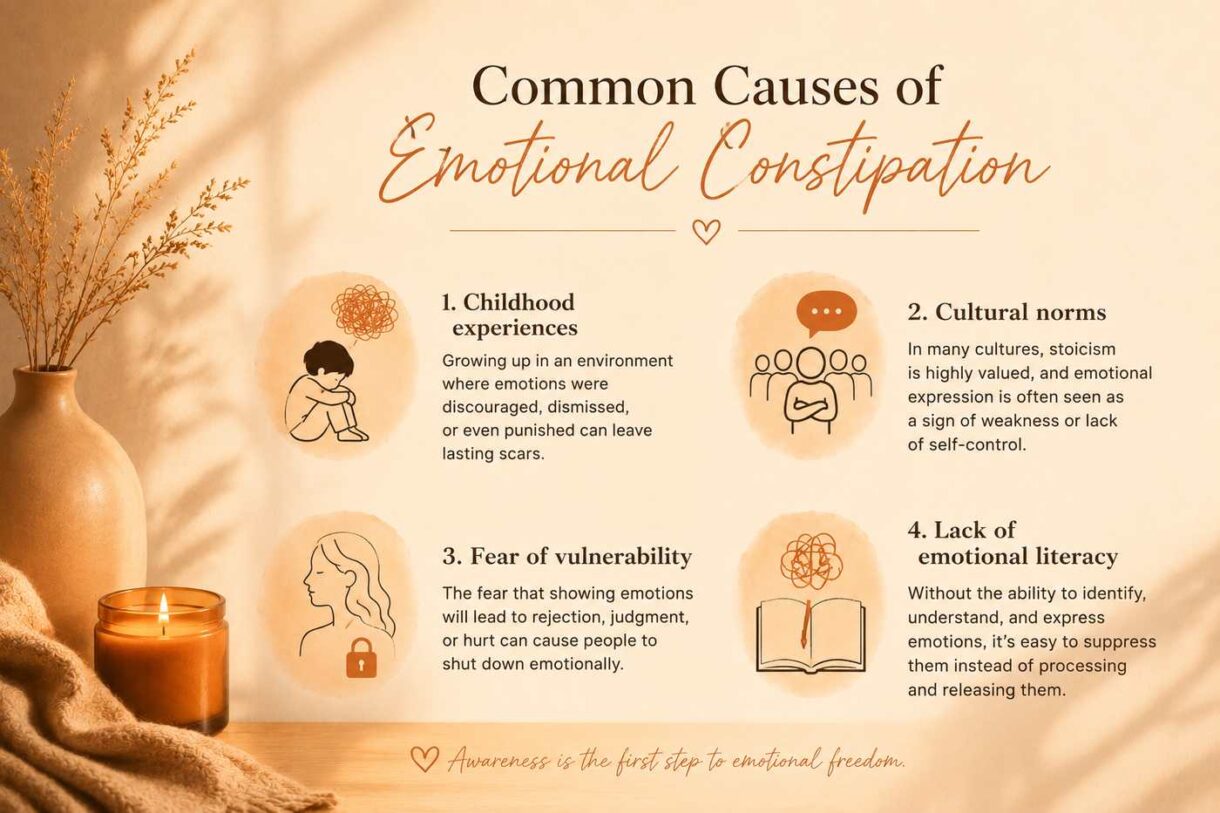
4. Lack of emotional literacy: Emotional literacy is the ability to identify, understand, and express emotions effectively. Without this skill set, individuals may struggle to articulate what they’re feeling, leading to frustration, confusion, and the tendency to suppress emotions rather than express them. This lack of emotional vocabulary makes it difficult to process and healthily release emotions.
If you’re wondering whether you tend to bottle up your emotions, use this checklist as a starting point for self-reflection. Everyone suppresses emotions occasionally, but if you regularly identify with several of these statements, emotional suppression may have become your default coping strategy.
Checklist of emotional suppression symptoms and warning signs
☐ I often say “I’m fine” even when I’m upset.
☐ I struggle to identify or describe what I’m feeling.
☐ I avoid difficult conversations to keep the peace.
☐ I rarely express anger, sadness, disappointment, or fear openly.
☐ I feel emotionally numb or disconnected from myself.
☐ I put other people’s needs before my own, even when it leaves me drained.
☐ I worry that expressing my emotions will make me seem weak, dramatic, or difficult.
☐ I replay conversations in my head instead of saying what I really think.
☐ I experience sudden emotional outbursts after holding things in for a long time.
☐ I often feel anxious, overwhelmed, or emotionally exhausted without knowing why.
☐ I notice physical symptoms such as headaches, muscle tension, jaw clenching, stomach discomfort, or trouble sleeping during stressful periods.
☐ I find it difficult to ask for help or emotional support.
☐ I struggle to be vulnerable, even with people I trust.
☐ I tend to distract myself with work, social media, or staying busy instead of sitting with uncomfortable feelings.
☐ I feel disconnected or distant in my relationships.
What Your Results May Mean
There isn’t a specific score that determines whether you’re emotionally suppressing your feelings. However:
- 0–4 statements: Occasional emotional suppression is normal and may simply reflect temporary stress or specific situations.
- 5–9 statements: You may have developed some patterns of emotional suppression that are worth exploring and addressing.
- 10 or more statements: Chronic emotional suppression could be affecting your emotional wellbeing, physical health, or relationships. Learning healthier ways to identify, process, and express emotions—or speaking with a therapist—may be beneficial.
This checklist is not a diagnostic tool, but it can help you recognize patterns that deserve attention. Becoming aware of emotional suppression is often the first step toward healthier emotional expression and stronger relationships.
Strategies for Overcoming Emotional Constipation
Emotional constipation can be as draining as its physical counterpart, leaving you feeling stuck, stressed, and disconnected. Fortunately, there is a cure. By embracing healthy emotional expression, practicing self-awareness, and gradually opening up, you can break free from the emotional blockages that hold you back. Here are some strategies for overcoming emotional constipation:
1. Practice emotional awareness: Take time each day to check in with yourself. What are you feeling? Where do you feel it in your body?
2. Start a feeling journal: Write down your emotions without judgment. This helps build your emotional vocabulary.
3. Use “I feel” statements: When communicating with others, clearly state your emotions. “I feel frustrated when…” is more effective than “You always…”
4. Engage in physical activity: Exercise, dance, or other movement can help release pent-up emotions.
5. Seek therapy: A mental health professional can provide tools and support for healthier emotional expression.
6. Practice gradual exposure: Start by expressing “safer” emotions in low-stakes situations, then work up to more vulnerable feelings.
7. Cultivate self-compassion: Be kind to yourself as you learn to express emotions. It’s a skill that takes practice.
8. Breathwork techniques to unlock emotional constipation and tension: Breathwork techniques, such as box breathing, physiological sighs, and slow diaphragmatic breathing, can help regulate the nervous system, reduce physical tension, and create a sense of safety that supports healthy emotional expression.
Best Therapy Approaches for Healing Emotional Constipation Gently
If emotional suppression has been part of your life for many years, trying to “let everything out” at once can feel overwhelming. A gentle, gradual approach is often more effective. Therapy provides a safe, supportive environment where you can explore emotions at a pace that feels manageable.
Different therapeutic approaches can help with emotional constipation in different ways.
Emotionally Focused Therapy (EFT)
Emotionally Focused Therapy helps people understand the emotions beneath their reactions. Rather than focusing only on behaviours or conflict, EFT explores underlying feelings such as fear, shame, loneliness, or sadness that may have been suppressed over time.
This approach is especially helpful for people who want to strengthen emotional intimacy in their relationships.
Cognitive Behavioural Therapy (CBT)
Sometimes emotional suppression is driven by unhelpful beliefs, such as:
- “I shouldn’t cry.”
- “Expressing emotions is a sign of weakness.”
- “If I tell people how I feel, they’ll reject me.”
CBT helps identify and challenge these thought patterns while developing healthier ways of responding to emotions.
Which Therapy Is Right for You?
There is no single “best” therapy for emotional constipation. The most effective approach depends on your experiences, personality, and goals. Many therapists integrate techniques from several evidence-based approaches to create a treatment plan tailored to your needs.
If emotional suppression is affecting your relationships, mental wellbeing, or daily life, seeking professional support can help you develop healthier emotional awareness and expression—one step at a time. The goal isn’t to express every emotion immediately, but to build the confidence and skills to experience your feelings safely and authentically.
Take the First Step Toward Emotional Freedom with Professional Support
Overcoming emotional constipation is a journey, not a destination. By practicing awareness, self-compassion, and gradual exposure to emotional expression, you can develop healthier relationships with yourself and others. Remember, your emotions are valid and deserve to be acknowledged and expressed in constructive ways.
If you’re struggling with emotional constipation and need support on your journey to healthier emotional expression, our experienced psychotherapy consultants are here to help. Reach out, or book an appointment today to start building a stronger, more connected relationship with yourself and those around you.
Frequently Asked Questions about Emotional Constipation
How does emotional suppression affect relationships and intimacy?
Emotional suppression can make it difficult to communicate openly, express vulnerability, and resolve conflict in healthy ways. Over time, bottled-up emotions may lead to misunderstandings, resentment, emotional distance, and reduced intimacy. Learning to express your feelings safely can help strengthen trust, improve communication, and foster deeper emotional connections.
How can I tell the difference between emotional constipation and depression?
Although they can share symptoms such as emotional numbness, fatigue, and withdrawal, they are not the same. Emotional constipation refers to the habit of suppressing emotions, while depression is a mental health condition that can affect mood, motivation, sleep, appetite, and daily functioning. If you’re experiencing persistent low mood, loss of interest in activities, or symptoms that interfere with your life, it’s important to speak with a healthcare professional for an accurate assessment.
What are the signs of emotional constipation in adults?
Common signs include difficulty identifying or expressing emotions, frequently saying “I’m fine” when you’re not, avoiding conflict, emotional numbness, people-pleasing, passive-aggressive behaviour, sudden emotional outbursts, chronic stress, and physical symptoms such as headaches, muscle tension, or digestive discomfort. If these patterns persist, they may indicate chronic emotional suppression.
How can I release emotional constipation without feeling overwhelmed?
Start slowly and focus on building emotional awareness rather than forcing yourself to express everything at once. Practices such as journaling, mindfulness, breathwork, gentle movement, and talking with a trusted friend or therapist can help you process emotions at a pace that feels safe. Remember, healing is gradual, and there’s no need to rush the process.
Is constant emotional numbness a sign of emotional suppression?
It can be. Emotional numbness is sometimes the result of long-term emotional suppression, where the mind protects itself by disconnecting from difficult feelings. However, numbness can also be associated with conditions such as depression, anxiety, trauma, or chronic stress. If emotional numbness is persistent or affecting your quality of life, seeking professional support can help identify the underlying cause.
Can emotional suppression lead to anxiety and burnout?
Yes. Continuously suppressing emotions can keep your body’s stress response activated, contributing to chronic anxiety, emotional exhaustion, and burnout over time. Ignoring difficult emotions doesn’t make them disappear—instead, they often resurface through physical tension, irritability, difficulty concentrating, sleep problems, or feeling emotionally drained. Developing healthier emotional expression can improve both your mental wellbeing and resilience to stress.