







Emotional connection is what makes a relationship feel close, safe, and meaningful. It’s the difference between feeling like true partners versus simply sharing a home and routine.
Most couples don’t lose connection overnight. It fades slowly, through busy schedules, stress, distractions, and small missed moments. The encouraging part is that connection is not something you either have or don’t have. It’s something you build by how you show up for each other every day.
At the core of emotional connection is a simple idea: feeling seen, heard, and responded to.
If you’re noticing more distance in your relationship, this guide will walk you through practical ways to rebuild closeness. And if you feel stuck in the same patterns, Ellis Nicolson Couples Specialists can help you understand what’s happening underneath and find your way back to each other.
What Is Emotional Connection in a Marriage?
Emotional connection is the sense that your spouse understands your inner world and cares about your feelings. It creates emotional safety, the ability to be open, vulnerable, and authentic without fear of judgment.
In practice, emotional connection shows up in small ways: a partner who listens when you talk, notices when you’re off, or responds when you reach out. These moments may seem minor, but they form the foundation of long-term intimacy.
Emotional connection meaning: Emotional connection is the feeling of being understood, seen, and emotionally supported by another person.
It means you can share your thoughts, feelings, and vulnerabilities with your partner—and trust that they will respond with care, empathy, and attention, rather than judgment or dismissal.
In a relationship, emotional connection shows up as:
- Feeling safe to be your authentic self
- Knowing your partner listens and “gets” you
- Experiencing mutual care, responsiveness, and closeness
- Being able to share both struggles and positive moments
At its core, emotional connection is not just about love—it’s about feeling emotionally secure and valued in that love.
Examples of emotional connection in long-term relationships
In long-term relationships, emotional connection is often less about dramatic romance and more about everyday responsiveness.
For example, a spouse might say, “Today was really hard,” and the other partner pauses, turns toward them, and asks, “What happened?” That small moment matters. It tells the partner, “I am here with you.”
Other examples include checking in after a stressful appointment, remembering something your partner was worried about, laughing together after a long day, or offering affection without it needing to lead anywhere. Over time, these repeated moments help both partners feel emotionally secure.
What Is a Bid for Connection?
In relationship psychology (especially Gottman research), connection is built through what are called bids for connection.
A bid is any attempt, big or small, to get your partner’s attention, affection, or support. Most bids are subtle and easy to miss. A simple comment like “Today was exhausting” or a gesture like leaning in for a hug is often a request for emotional engagement.
The strength of a relationship depends less on how often you connect in big ways, and more on how you respond to these small, everyday moments.
Why Do Bids for Connection Matter?
Over time, relationships tend to follow one of three patterns when bids happen:
| Response Type | What It Looks Like | Long-Term Impact |
| Turning Toward | Acknowledging, engaging, showing interest | Builds closeness and trust |
| Turning Away | Ignoring, distraction, minimal response | Creates distance over time |
| Turning Against | Criticism, irritation, defensiveness | Leads to conflict and resentment |
Even brief responses, like making eye contact or saying “tell me more”, can strengthen connection. Ignoring bids repeatedly, on the other hand, slowly erodes emotional intimacy.
How to Recognize a Partner’s Bid for Connection?
Many people assume bids are obvious, but they’re often indirect. A partner might not say, “I need connection right now.” Instead, it comes out in small cues.
You might notice a shift in tone, a casual question, or a quiet moment where your partner lingers near you. Sometimes bids even show up as irritation or withdrawal, less as a clear request, and more as a signal that something is needed.
Learning to recognize these moments is one of the most important relationship skills. When in doubt, it’s often better to assume it is a bid and respond with curiosity.
How to Respond to Bids for Connection?
Responding well doesn’t require the perfect words. What matters is presence and attentiveness.
When your partner reaches out, even in a small way, the goal is to show that you’re available. This might look like pausing what you’re doing, making eye contact, or simply acknowledging what they said.
The difference between disconnection and closeness often comes down to micro-responses, not major conversations.
Here’s a simple way to think about it:
| Situation | Disconnected Response | Connected Response |
| Partner says “Long day…” | “Yeah, me too” (distracted) | “What made it long?” |
| Partner shows you something | Glance, no reaction | “That’s interesting, tell me more” |
| Partner seems quiet | Ignore | “You seem off, what’s going on?” |
These moments take seconds, but they signal something powerful: you matter to me.
What Happens When Bids Are Missed?
When bids are consistently ignored or dismissed, couples often begin to feel emotionally disconnected, even if nothing dramatic has happened.
Over time, this can lead to:
- Feeling unseen or unimportant
- Less meaningful conversation
- Increased frustration or withdrawal
- A sense of living parallel lives
This is often when couples describe their relationship as feeling “like roommates.” The issue isn’t a lack of love, it’s a lack of ongoing emotional responsiveness.
How to create emotional safety to connect deeply?
Emotional safety is the foundation of deep connection. Without it, partners may hide their feelings, avoid difficult conversations, or protect themselves from rejection.
To create emotional safety, practice listening without criticism, responding with curiosity instead of defensiveness, and validating your spouse’s feelings even when you see the situation differently. Emotional safety grows when both partners believe they can be honest without being punished, mocked, dismissed, or ignored.
A helpful response might sound like: “I can see why that felt painful. I want to understand more.
11 Ways to become more emotionally connected with your partner
1. Prioritize Quality Time Together
Spending meaningful time together is one of the best ways to reinforce your emotional connection. This doesn’t mean just sitting next to each other while watching TV but truly engaging with one another. Plan regular date nights, take weekend getaways, or even set aside time each day to talk without distractions. Prioritizing quality time helps rekindle the connection that can get lost in the busyness of life.
2. Practice Active Listening
Listening is a powerful tool in any relationship. When your spouse speaks, give them your full attention. Make eye contact, put away your phone, and avoid interrupting. Show empathy by acknowledging their feelings and responding thoughtfully. Active listening makes your partner feel valued and understood, strengthening the emotional intimacy in your marriage.
3. Express Appreciation and Gratitude
Small gestures of appreciation go a long way in building emotional connection. Take the time to acknowledge and thank your spouse for the things they do, whether it’s making dinner, handling a stressful work situation, or simply being there for you. Expressing gratitude fosters positivity and reinforces the love you share.
4. Engage in Meaningful Conversations
Beyond daily responsibilities and routines, have deep and meaningful conversations about your dreams, fears, and aspirations. Discuss topics that matter to both of you, such as personal growth, future plans, and shared values. These conversations help create a deeper understanding and emotional closeness.
5. Show Physical Affection
Physical touch is a fundamental part of emotional intimacy. Holding hands, hugging, kissing, and other forms of affectionate touch can enhance emotional security and connection. Even small gestures, like a reassuring touch on the shoulder or a warm embrace, can make a big difference in how connected you feel. Explore our guide on how to enhance physical intimacy with your partner for practical, relationship-focused advice.
6. Support Each Other Through Challenges
Marriage comes with its ups and downs, and being there for your spouse during difficult times is crucial. Offer emotional support by listening, reassuring, and encouraging them. Being a dependable and understanding partner strengthens trust and deepens your emotional connection.
7. Laugh Together
Laughter is a powerful bonding tool. Sharing jokes, watching a comedy, or reminiscing about funny moments can help relieve stress and bring joy to your relationship. Couples who laugh together tend to feel closer and more connected.
8. Engage in Shared Activities
Doing things you both enjoy strengthens your connection. Whether it’s cooking together, exercising, playing board games, or engaging in a hobby, shared experiences create lasting memories and bring you closer together.
9. Maintain Emotional Honesty
Being open and honest about your feelings fosters a deeper emotional connection. If something is bothering you, express it calmly and constructively. Likewise, share your joys and triumphs. Vulnerability strengthens trust and allows your spouse to truly understand you.
10. Keep the Romance Alive
Romance should not fade over time—it should evolve. Surprise your spouse with love notes, spontaneous gifts, or unexpected gestures of affection. Keeping the romance alive keeps the emotional bond strong and reminds both of you why you fell in love in the first place.
11. Seek Professional Help
Sometimes our best efforts don’t seem to be enough, and we feel alone, lonely and distant from our spouse. We know we long for connection but don’t want to burden our spouse, don’t know how to express our feelings or fear being vulnerable with them. A therapist specializing in Emotionally Focused Therapy can help you get past these barriers. You and your spouse will learn and practice skills in session to help you be vulnerable and know how to respond when your spouse is vulnerable. These skills can easily and effectively be transferred to your lives so you both feel heard, understood, appreciated, valued and emotionally connected to your spouse.
Rituals that keep emotional connection alive with partner
Rituals help couples stay connected even when life gets busy. A ritual does not need to be elaborate. It simply needs to be consistent and meaningful.
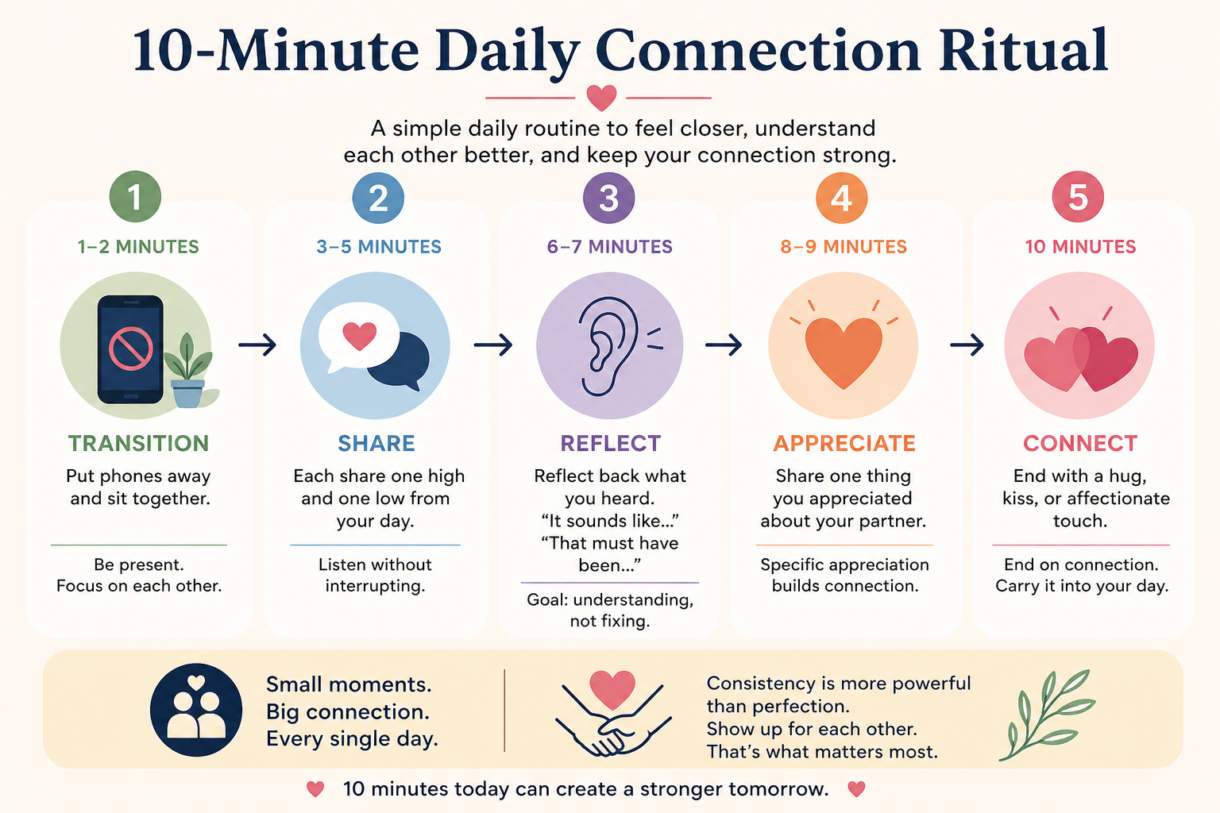
Examples include morning coffee together, a 10-minute evening check-in, a goodbye kiss, a Sunday walk, or a weekly no-phone dinner. These repeated moments create predictability and emotional security. Technology plays a bigger role in relationships than most people realize. Learn how it may be affecting yours in our blog The Impact of Technology on Relationships.
A daily 10-minute connection ritual might look like this:
When Emotional Connection Feels Hard
There are times when connection doesn’t come easily. You might want closeness but feel unsure how to express it, or worry about being vulnerable.
In these situations, it’s common to either withdraw or communicate in ways that don’t fully reflect what you need. This is where many couples get stuck, not because they don’t care, but because they don’t know how to reach each other effectively.
Approaches like Emotionally Focused Therapy (EFT) are designed to help couples recognize these patterns and learn how to respond to each other in more supportive ways. With the right tools, many couples find they can rebuild connection more quickly than they expected.
Reconnect with the Right Support: Relationship Specialists
If you’re feeling stuck in the same patterns, wanting connection but not knowing how to reach each other, you don’t have to figure it out alone.
At Ellis Nicolson, we help couples move from disconnection to understanding using proven approaches like Emotionally Focused Therapy (EFT). Our work focuses on helping you feel heard, express what really matters, and respond to each other in ways that rebuild trust and closeness.
Connection can feel natural again, with the right guidance. Book a consultation today and take the first step toward reconnecting.
FAQ: How to be More Connected to Your Partner
What is emotional connection in marriage?
Emotional connection in marriage is the feeling that your spouse understands, values, and responds to your inner world. It includes trust, emotional safety, vulnerability, and consistent care.
What is the real meaning of emotional connection?
The real meaning of emotional connection is feeling deeply seen, heard, accepted, and emotionally safe with another person. In marriage, it means both partners can share their feelings and needs without fear of rejection or judgment.
What are examples of emotional connection in a relationship?
Examples include listening attentively, checking in after a hard day, offering comfort, remembering important details, showing affection, sharing appreciation, and asking meaningful questions.
How can I emotionally reconnect with my spouse?
Start with small, consistent actions: put away distractions, ask how your partner is really feeling, listen without fixing, express appreciation, and create a daily or weekly ritual for connection.
What are the questions that help you emotionally connect with partner?
Questions like “When do you feel closest to me?” “What do you need more of from me?” and “What has felt hard for you lately?” can help couples reconnect emotionally.
What is emotional safety in a relationship?
Emotional safety means both partners feel able to be honest, vulnerable, and imperfect without being criticized, dismissed, or punished.
How do bids for connection build intimacy?
Bids for connection build intimacy because they create small opportunities to respond with care. Each time a partner turns toward a bid, trust and closeness grow.
What is the difference between emotional connection and physical attraction?
Physical attraction is about chemistry and desire. Emotional connection is about trust, safety, understanding, and feeling emotionally close.
What are easy bonding activities for couples at home?
Easy bonding activities include cooking together, playing question games, taking a walk, sharing appreciation notes, planning a future date, or having a no-phone dinner.
When should couples consider therapy?
Couples should consider therapy when they feel stuck, lonely, emotionally distant, unable to communicate safely, or caught in the same painful patterns.
How to check in emotionally with my partner?
To check in emotionally with your partner, take a few intentional minutes to ask about their feelings, not just their day, and listen with full attention.
Start by creating a distraction-free moment, then ask an open-ended question like, “How are you feeling today, really?” or “What’s been on your mind lately?” The goal is to understand their emotional experience, not just gather information.
As they respond, focus on listening without interrupting or trying to fix the situation. Reflect back what you hear with simple statements like, “That sounds really stressful,” or “I can see why that mattered to you.” This helps your partner feel understood.
You can end the check-in by asking, “Is there anything you need from me?” or by expressing appreciation for them sharing.
Even short, consistent check-ins just 5 to 10 minutes a day, can significantly strengthen emotional connection over time.